The Zilarent Blog
Best Insurance for Turo Hosts: What to Buy at Each Fleet Stage
Why This Question Comes Up Now
Turo's host protection plans are built around the trip. Turo renamed them earnings plans in January 2026, and all three share one design: third-party liability insurance and physical damage reimbursement during the Reservation Period, the window shown on a booked trip (Turo, Earnings plans in detail). Turo host insurance questions start once a fleet grows past a few cars and there is always one in the shop, one being cleaned and one waiting between bookings. What covers the car outside the trip line, and what replaces Turo's plan if you stop listing?
The Three Fleet Stages
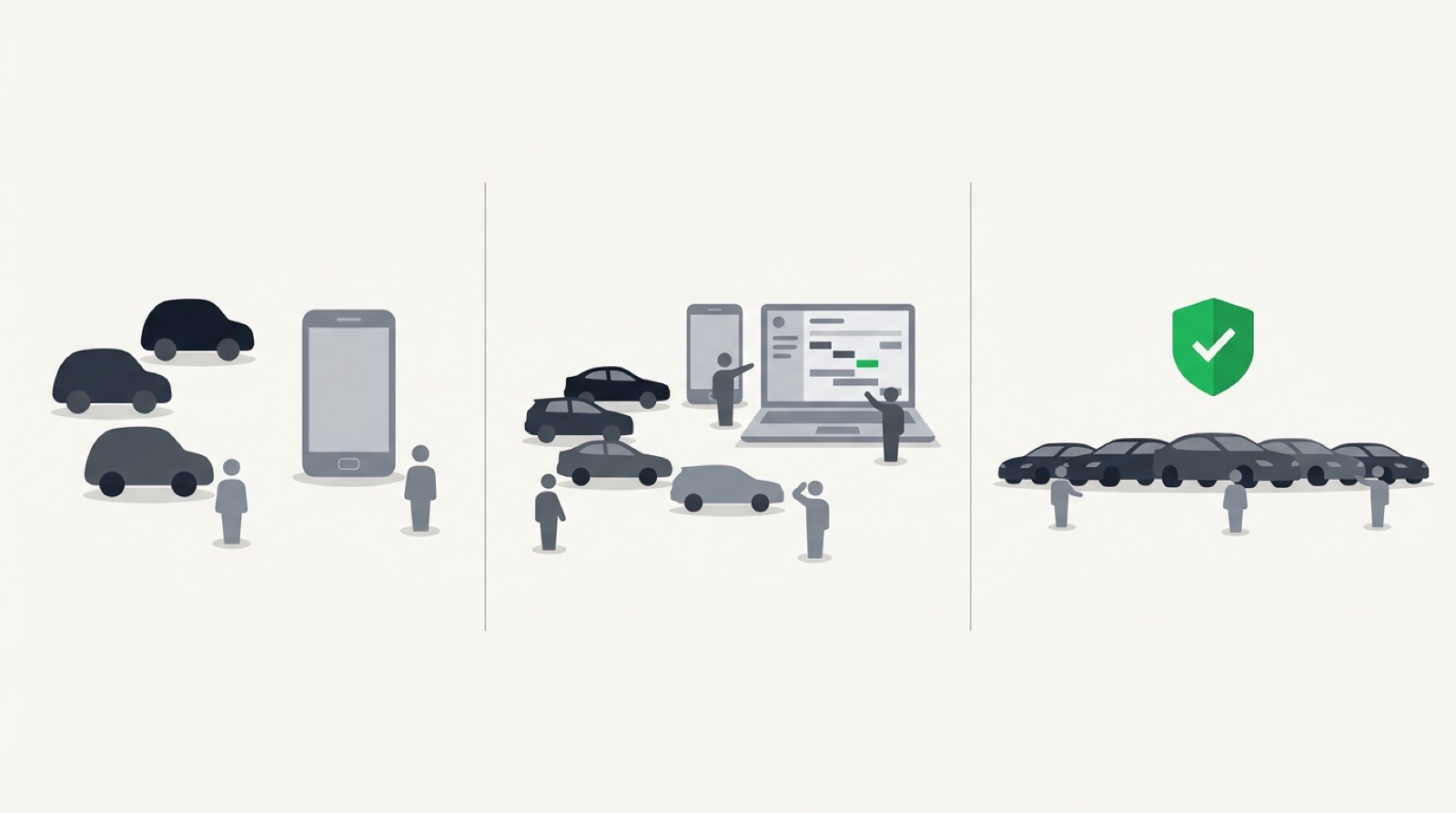
The operators we onboard tend to move through three stages: Turo only, Turo plus private bookings, then fully private. Coverage changes at each one, and the gaps show up at the transitions. Here they are in order: what covers the car, what falls outside, and what you arrange yourself.
Stage One: On Turo Only
Turo host insurance at this stage is mostly Turo's own plan. Every plan includes up to $750,000 in third-party liability insurance under a policy issued to Turo (some states and airports differ, and New York now defaults to state minimums), plus contractual reimbursement for physical damage above your damage responsibility, which runs from $250 to $2,750 per claim depending on the plan. Turo states that this reimbursement is a contract and isn't insurance (Turo, Earnings plans in detail).
The plan stops at the trip line. Coverage applies during the Reservation Period, and liability extends to delivery when the guest books it. Retrieving the car after a trip, cleaning, repositioning, parking in your lot and personal use all sit outside it (Turo, Earnings plans in brief). Turo also warns that many personal auto policies exclude peer-to-peer car sharing.
Off-trip insurance fills that window as a separate product. Some hosts carry it; some self-insure the gap. Eligibility varies by state and offers change, so check Turo's off-trip insurance page and Turo's host insurance overview for what is offered today. For the full mechanics, read how Turo's own insurance works.
Stage Two: Turo Plus Private Bookings
Here coverage splits. A car on a Turo trip is covered by Turo's plan for that trip. A car on a private booking needs its own commercial rental policy, because a marketplace plan applies only to bookings made on the marketplace. Many fleets run both on the same car in one week.
So the best insurance for Turo hosts running two channels is two layers, assigned car by car and date by date. Monday's renter came through Turo, Thursday's through your site, and each trip falls under a different policy.
That makes it an operations problem too: your records need to show which channel booked every trip. Zilarent's two-way Turo calendar sync puts every Turo trip and every private booking on one calendar, so you can see, for any date, which channel booked each car. That control sits at the center of Zilarent's Turo-to-private transition.
Before you drop a Turo protection plan on any car
- Confirm in writing what your Turo plan and any off-trip policy cover, and that the off-trip product is still offered in your state.
- Get the commercial policy bound, with a set effective date, before the first private trip on that car.
- Tell your insurer you run both channels, and list which cars take private bookings.
- Record the date each car's coverage changes when you move it fully off Turo.
Stage Three: Fully Private Fleet
Turo commercial insurance is the phrase many hosts search at this point. Once no car lists on Turo, what you need is a commercial auto policy written for rental use, because no marketplace plan applies to any booking. The stack is yours to arrange, and it usually has four parts:
- Commercial auto liability: injury and property damage to others while a renter drives. Required limits vary by state.
- Physical damage coverage: collision and comprehensive on your own vehicles, the job Turo's reimbursement used to do.
- Rental-specific policy terms: a policy that names renting to the public as the use of the vehicle.
- Umbrella or excess liability: a layer above the primary limits for a large claim.
Build the plan around these coverage types, so it survives any one provider changing its offer. Your rental agreement and renter screening should match what the policy requires. For the full list, including business coverage beyond the cars themselves, read our guide to car rental business insurance. If you are one of the operators already running a private fleet, the setup path starts from your existing books.
Turo's Host Protection Plans vs. Commercial Policies
The short version of this guide, one row per stage. The Turo details come from Turo's own earnings plan summary; confirm current terms there.
| Fleet stage | What covers the car | What it does not cover | What the host still needs to arrange |
|---|---|---|---|
| On Turo only | Turo's host plan, during each Turo trip: liability insurance plus physical damage reimbursement | Time between trips, retrieval after a trip, cleaning, repositioning, personal use | Off-trip coverage if you want it, and a check of your personal policy's car-sharing exclusion |
| Turo plus private | Turo's plan for Turo trips; your commercial rental policy for private bookings | Private bookings, under Turo's plan | A commercial policy for every car that takes private bookings, and records of which channel booked each trip |
| Fully private | Your commercial rental policy: liability, physical damage, rental-use terms and usually an umbrella layer | Anything you did not buy, since no marketplace plan sits behind it | The full stack, plus rental agreements and renter screening that match the policy |
What Drives the Cost
Rental-fleet policies are commonly priced as a fixed fee per car per month. Your premium comes from the details of your fleet, and these move it most:
- Vehicle class and value
- Your state
- Claims history
- Deductible choice
- Fleet size
- Driver screening
For budgeting and how those factors play out, see what fleets actually pay for coverage.
Where Zilarent Fits
Zilarent makes car rental software built for operators going private, with a booking site on your own domain and two-way Turo calendar sync. Zilarent also has relationships with insurance companies that cover car rental businesses, and makes introductions to them for its operators. The introductions are free and available in every US state. They cover your private and direct rentals; trips booked on Turo stay under Turo's own plans. Zilarent is not an insurer or a licensed agent; this guide is general information, so confirm coverage with a licensed provider. Plan it early and stages two and three go smoother. Zilarent's pricing is $299/month plus a 6% booking fee on bookings made through your Zilarent site.
Common Questions
Does Turo's host protection plan cover my car when it is not on a trip?
Generally no. Turo's host plans (now called earnings plans) apply during an active trip, plus liability during a booked delivery. Off-trip coverage is a separate product that not every host carries. Confirm your own plan's terms directly with Turo, since the details and the available providers change.
If I keep some cars on Turo and take private bookings on others, do I need two kinds of insurance?
Yes. A car on a Turo trip is covered by Turo's trip-based plan. A car you book privately needs its own commercial policy, because no marketplace plan applies to a booking made off the platform. Running both channels means carrying both kinds of coverage, car by car.
What replaces Turo's protection plan once a fleet goes fully private?
A commercial policy built for rental use: commercial auto liability, physical damage coverage for your own vehicles, rental-specific policy terms, and often an umbrella layer above the primary limits.
How is rental-fleet insurance usually priced?
Commonly as a fixed fee per car per month. The premium moves with vehicle class and value, your state, claims history, deductible choice, fleet size, and driver screening. Treat any number quoted elsewhere as a general range for planning, separate from a quote for your fleet.
Can Zilarent get me a policy?
Zilarent is not an insurer or a licensed agent. We have relationships with insurance companies that cover car rental businesses and make free introductions for our operators in every US state, for your private and direct rentals. Turo trips stay under Turo's own plans. You confirm terms with a licensed provider.
Is it safe to plan around one off-trip insurance product?
Treat any single off-trip or host-protection product as something that can change or be discontinued. Build your coverage around the types described above, so one provider's decision doesn't leave a gap.
Not sure which stage you are in? We can talk through your fleet's coverage and map what to line up before your next private booking.
Line up coverage before your first private booking.
See the booking site, the Turo calendar sync and the free insurance introductions on one call.
No commitment. We’ll reach out within 24 hours.